If you’ve ever walked through our manufacturing floor and watched a brand-new pressure gauge roll off the calibration line, you’ve probably wondered the same thing many people do when they first encounter these unassuming, dial-backed tools: “What’s the absolute maximum pressure this thing can actually measure?” As a third-generation pressure gauge supplier, I’ve fielded this question in a thousand different settings—from a nuclear power plant engineer troubleshooting a pipeline in Ohio to a small-batch craft brewery calibrating their carbonation tanks in Portland. The answer isn’t a one-size-fits-all number; it’s a conversation shaped by design, material, application, and the non-negotiable line between accurate measurement and catastrophic failure. Let’s break this down like we do when we sit down with a customer to map out their exact needs, no jargon meant to confuse, just real-world experience from someone who’s built these tools for 30 years. Pressure Gauge

First, let’s start with the basics that most people don’t get to see behind the dial. Every pressure gauge has two key pressure limits baked into its DNA: the working pressure range, which is what it’s calibrated to measure accurately day in and day out, and the burst pressure, the absolute maximum pressure it can withstand before physical failure. The question “what’s the maximum pressure a pressure gauge can measure?” almost always blurs these two lines, so let’s untangle that first. The working range is the number stamped on the front of the gauge—like 0 to 10,000 psi, or -30 to 0 psi for vacuum service. That’s its sweet spot, where readings are precise within ±0.5% or ±1% of full scale, depending on the class of the gauge. The burst pressure, though, is the real hard limit, usually 2 to 4 times the full-scale working pressure for standard industrial gauges, and sometimes higher for specialty units. For example, a 10,000 psi gauge I supplied to a mining equipment manufacturer last year had a burst pressure rating of 40,000 psi—enough to contain a sudden spike from a hydraulic hose that split unexpectedly, so the gauge didn’t send shrapnel flying.
But here’s where it gets interesting: the maximum measurable pressure isn’t just about brute strength. It’s also about what the gauge is designed to measure. If you need to track low-pressure air flow in a hospital’s HVAC system, you’re looking at gauges that measure in inches of water column, not psi. Their maximum measurable pressure tops out around 15 psi, and their design prioritizes sensitivity over toughness—they’d never survive a 1,000 psi line, but they can pick up tiny pressure changes that would be invisible to a heavy-duty industrial gauge. On the flip side, ultra-high pressure gauges used in oil and gas fracking or water jet cutting can measure up to 150,000 psi, though those are specialty units made with solid stainless steel bodies and sapphire crystals, not the brass or plastic parts you might see in a backyard pool filter pressure gauge.
One of the most common mistakes I see customers make is buying a gauge with a maximum pressure that’s just enough for their typical operating pressure. That’s a recipe for a broken gauge (or worse) down the line. Hydraulic systems, for example, almost always have pressure spikes—when a valve slams shut, when a load shifts, when a pump kicks on and surges. If your system’s normal operating pressure is 8,000 psi, a gauge rated for 10,000 psi might seem like overkill, but that extra 2,000 psi buffer is there for those unexpected spikes. I learned this the hard way early in my career: a farmer bought a set of gauges for his combine’s hydraulic system, picking units rated exactly for his 7,000 psi operating pressure. A week later, he was back at our shop with three broken gauges—pressure spikes from the cold start had blown the Bourdon tubes (that coiled metal part inside every analog pressure gauge) right open. That’s why our sales team always pushes customers to pick a gauge with a full-scale range that’s 25% to 50% higher than their maximum expected operating pressure, not just the average.
Now, let’s talk about the parts that actually set that maximum limit, because that’s the most fascinating part of how these tools work. The heart of an analog pressure gauge is the Bourdon tube—usually a C-shaped, coiled, or helical tube made of metal that bends when pressure inside it increases. The size, thickness, and material of that Bourdon tube are the biggest factors in what maximum pressure the gauge can measure. For low-pressure gauges (under 60 psi), the Bourdon tube is thin, made of brass or bronze, and large in diameter, so small pressure changes make it bend enough to move the dial needle. For high-pressure gauges, the Bourdon tube is made of solid stainless steel, sometimes even Hastelloy or Inconel for corrosive or ultra-high pressure service, and it’s much thicker and smaller in diameter, so it doesn’t deform under pressure. If the Bourdon tube is too thin for the pressure, it will stretch permanently over time, making the readings inaccurate. If it’s too thick, it won’t bend enough to move the needle at all.
Other parts add to that limit too. The gauge’s body is made of material that has to handle pressure and prevent leakage—brass for low-to-medium pressure, stainless steel for most industrial use, and solid alloy for ultra-high pressure. The window (dial cover) has to withstand pressure surges too; plastic windows can crack under high pressure, while shatter-resistant glass or polycarbonate is standard for industrial units, and sapphire is used for the highest pressure, most extreme environments. Even the connection point between the gauge and the process line is important—if the fitting is rated for only 10,000 psi, a 15,000 psi gauge attached to it is useless, because the connection will fail first.
Digital pressure gauges, which have gotten more popular in the last 20 years, have a slightly different set of limits. Instead of a Bourdon tube, they use a pressure sensor—usually a small silicon or ceramic diaphragm that deforms under pressure, and a circuit that converts that deformation into a digital reading. The maximum pressure a digital gauge can measure is set by the sensor’s design: for general use, that’s up to around 10,000 psi, while specialty digital gauges can go as high as 200,000 psi. The trade-off with digital gauges is that they’re more sensitive to overpressure spikes than analog gauges, usually having a burst pressure of 1.5 to 2 times full scale, instead of 2 to 4 times. That means they need similar overpressure protection, and many of our digital gauges come with a pressure limiter accessory to prevent damage.
I’ve seen so many examples over the years of how getting this right (or wrong) impacts real work. A few years back, we supplied a set of 50,000 psi pressure gauges to a company that tests bulletproof glass for law enforcement. Those gauges have to measure the pressure of the air cannon that fires projectiles at the glass, and a 10% overpressure spike would mean a bad test result or a broken glass sample. We paired each gauge with a pressure relief valve set to 55,000 psi, so the maximum pressure the gauge would ever be exposed to was 55k, and the gauge’s full scale was 50k—perfect balance. Last year, a customer in the food and beverage industry called us in a panic: they had a batch of craft beer stuck in a carbonation tank, and their old pressure gauge was stuck at 30 psi, too high for the tank’s design (which maxed out at 15 psi). Turns out they’d bought a gauge rated for 0 to 100 psi because it was cheaper, and the carbonation process had pushed the pressure way over the tank’s limit, leading to the stuck batch. We swapped in a properly rated gauge that same day, and avoided a full tank loss.
There are also industry standards that govern maximum pressure ratings for pressure gauges, to make sure they’re consistent and safe. The most common ones come from organizations like ASME (American Society of Mechanical Engineers), ISO (International Organization for Standardization), and EN (European Committee for Standardization). For general industrial gauges, ASME B40.100 sets the standards for accuracy, pressure ratings, and testing. That means a gauge that’s labeled as 0 to 10,000 psi has to pass a series of overpressure tests, accuracy tests, and durability tests, so you can trust that it will perform as advertised. Specialty gauges for specific industries have their own standards too—like ASME B40.7 for gauges used in the oil and gas industry, which have much stricter burst pressure requirements, or ISO 11095 for gauges used in medical applications, which have to meet very low pressure ranges with extremely high accuracy.
Now, let’s talk about the edge cases, because those are the ones that test what a pressure gauge can actually measure. Vacuum gauges, for example, measure pressure below atmospheric pressure, so their maximum “pressure” is technically atmospheric pressure (around 14.7 psi at sea level), but they’re calibrated to measure down to as low as a few microns of mercury for high-vacuum applications, like semiconductor manufacturing. Absolute pressure gauges measure pressure relative to a perfect vacuum, not atmospheric, so their maximum pressure goes way up—we’ve supplied absolute pressure gauges for climate chambers that measure up to 200 psi absolute, and ultra-high vacuum gauges that measure down to 1e-12 psi absolute, used in research labs studying space-like conditions.
What about overpressure damage? That’s another big part of the maximum pressure question. Even the strongest gauge will fail if you push it past its burst pressure, and when it fails, it can be dangerous. Bourdon tubes can rupture, sending metal shrapnel flying, or the gauge body can split, releasing pressurized fluid or gas. That’s why all our high-pressure gauges come with a blow-out back—a feature where, if the pressure inside gets too high, the rear of the gauge (instead of the front dial or window) will rupture, directing the pressure away from anyone standing in front of it. It’s a simple feature, but it’s saved countless injuries over the years, especially in industries where gauges are installed near operators.
So, if you’re wondering what the maximum pressure a pressure gauge can measure, the short answer is: it depends on the type, design, and application, ranging from less than 1 psi for low-pressure medical gauges to over 200,000 psi for specialty ultra-high pressure units. But the real answer is that the maximum pressure you can safely and accurately measure with a pressure gauge is a decision that should be based on more than just the gauge’s stamped range. You have to account for your system’s typical operating pressure, expected pressure spikes, the type of fluid or gas you’re measuring, the environment the gauge will be in (corrosive? vibrating? extreme temperatures?), and industry safety standards.
As a pressure gauge supplier, we don’t just sell gauges—we help customers figure out what they actually need. We’ve seen customers waste money on overbuilt gauges that are too expensive for their application, and we’ve seen customers go through dozens of cheap, underbuilt gauges that fail, leading to downtime or safety risks. If you’re working on a project, whether it’s a small brewery carbonation tank, a hydraulic mining system, a medical vacuum pump, or an ultra-high pressure water jet cutter, and you need a pressure gauge that can measure the right pressure accurately and safely, we’re here to help. We can walk through your specific needs, recommend the right gauge, and make sure it’s calibrated and tested to meet your requirements. There’s no such thing as a one-size-fits-all pressure gauge, and there’s no such thing as a stupid question when it comes to getting your pressure measurement right.
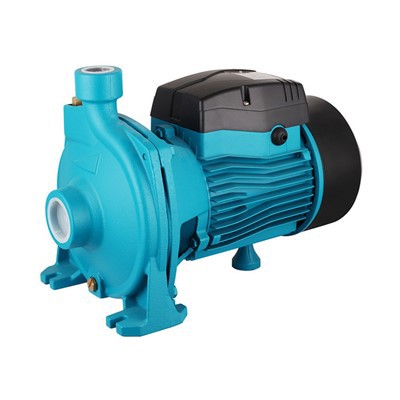
To discuss your pressure gauge needs and find the perfect solution for your application, feel free to reach out for procurement consultation.
Domestic Pump References:
- ASME B40.100-2022, Pressure Gauges and Gauge Attachments
- ISO 5167-1:2003, Measurement of fluid flow by means of pressure differential devices
- European Pressure Equipment Directive (PED) 2014/68/EU
- Beckwith, T. G., Marangoni, R. D., & Lienhard, J. H. (2017). Mechanical Measurements (7th ed.). Wiley.
- National Institute of Standards and Technology (NIST) Handbook 44, Specifications, Tolerances, and Other Technical Requirements for Weighing and Measuring Devices
Taizhou Hanner Machinery Co., Ltd.
Taizhou Hanner Machinery Co., Ltd. is one of the leading pressure gauge manufacturers and suppliers in China. We warmly welcome you to wholesale hot selling pressure gauge from our factory. All customized products are with high quality and competitive price.
Address: Southeast Industrial Accumulation, Songmen Town, Wenling City, Zhejiang, China
E-mail: kathy@cnhanner.com
WebSite: https://www.hannerpump.com/
