Hey there, Portable Solar Panels
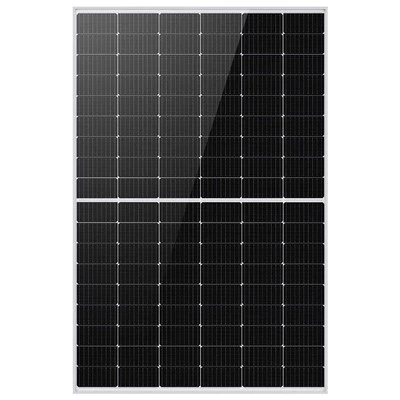
I’m Maya, and I’ve been in the portable solar panel game for nearly seven years—first troubleshooting for customers who bought mismatched gear, then helping folks find the right setup for everything from phones to medical devices. One question I get way more than any other is this: “How do I know if a portable solar panel will actually work with my stuff?” It’s not just about “it looks like it fits”—trust me, I’ve seen customers bring back perfectly good panels because they misread a simple number, or blow a fuse on a device because they skipped a tiny detail.
Let’s break this down like I’d walk you through it in my workshop, no jargon, no confusing charts—just real stuff I’ve seen save people from headaches (and ruined gear).
First, let’s start with the basics everyone should memorize: your device’s specs. No, you don’t need an engineering degree—just two numbers, and they’re super easy to find. Grab the box it came in, or pull up the user manual, or even check the small sticker on the bottom/back. Look for “input” and “voltage rating.” Wait, hold on—there’s “input voltage” and “current” too, but let’s not get ahead of ourselves.
Voltage is the big one people mess up most. Think of electricity like water coming out of a faucet: voltage is the water pressure. If your device only needs 5 volts (that’s what most phones, wireless earbuds, and small tablets use) and you plug it into a panel that pushes 12 volts? That’s like hooking up a garden hose to a fire hydrant. Too much pressure, and you’ll fry the charging port inside your device before you can say “solar power.” I’ve seen this happen a lot—once, a customer brought in a $1,200 portable CPAP machine because he used a random panel he found online, and the charging board was dead. He thought “12V is 12V” but his CPAP actually needed a regulated 12V, not just the raw output from a panel. More on that later.
Next, current. That’s the amount of electricity (like the gallons of water per minute) your device needs. It’s measured in amps, usually milliamps (mA) for small stuff, so 5V/2.1A means it can take up to 2.1 amps. If your solar panel can push at least that? Perfect. If it’s less? It’ll charge slower—like trying to fill a swimming pool with a garden hose. No damage, just not fast. For example, a 10,000 mAh phone battery needs about 5V/2A to charge fully in 2-3 hours. If your panel only does 5V/1A, it’ll take twice as long, which is fine if you’re camping for a week, but annoying if you need it fast.
Now, your solar panel’s specs—this is where I see people get tripped up. Every panel we sell lists two key outputs: “open circuit voltage (Voc)” and “maximum power voltage (Vmp).” Voc is the voltage when the panel is in direct sun, not connected to anything—this is not what you’ll use to charge your device. Vmp is the sweet spot: that’s the voltage the panel produces when it’s working at its best, powering a device (not just sitting in the sun). This is the number you need to match to your device’s input voltage.
Wait a second—what about USB ports? A lot of our panels have USB-A or USB-C ports, so people think “it works with everything.” But not all USB is created equal. A standard USB-A port puts out 5V, so it works with phones and earbuds, but if you have a device that needs 9V or 12V (like a tablet, a camera battery, or that CPAP I mentioned), a standard USB port won’t cut it. That’s why we have panels with adjustable DC ports—you twist a dial to pick 5V, 9V, 12V, even 18V, so you can match it exactly. I can’t tell you how many times a hiker with a mid-sized tablet has come to us saying their panel “didn’t work” because it only had a 5V USB port—they needed that higher voltage, and the adjustable fixed it.
Another thing: regulated vs. unregulated panels. This is the secret most big brands won’t tell you. Unregulated panels (cheaper ones, usually no brand name) put out Voc that’s 2-3V higher than their Vmp when it’s super sunny. So a 12V unregulated panel might push 14V on a hot day. That’s fine if you’re charging a car battery (which can handle higher voltage), but deadly for sensitive electronics like phones, GPS devices, or portable fans. Regulated panels—all the ones we sell are regulated—have a built-in component that keeps the voltage steady at your desired level, no matter how bright the sun is. No more fire hydrant pressure. I test every panel for this in our workshop, just to be sure—last month, a customer brought in a cheap unregulated panel he got at a big box store, and it was putting out 15V when connected to his 12V laptop charger. We showed him how our regulated 12V panel held steady at 12.1V, and he ordered two for his work van.
Now, what about devices with specific adapters? Let’s say you have a portable cooler, or a handheld gaming console, or even a medical device like a nebulizer. They usually come with a barrel plug or a DC connector. First, check the adapter’s label—it’ll say “Output: X volts, Y amps” and the plug size (like 5.5mm x 2.1mm, which is the most common). Then match that to your panel’s adjustable DC port. But here’s a pro tip: make sure the plug is oriented correctly. If you plug it in backwards, even if the voltage is right, it’ll fry your device. We always include a polarity guide with all our panels, and I tell every customer to double-check before plugging in—no exceptions. Once, a customer had a gaming laptop that wouldn’t charge, and it turned out he flipped the plug. He was so relieved when we showed him the polarity guide—we even offered to walk him through it over the phone, no extra charge.
What about power banks? A lot of people use solar panels to charge their power banks first, then charge their devices from the power bank. Is that a workaround? Yeah, but it adds an extra step, and you lose some efficiency. A good regulated panel will charge your power bank directly, but if you skip the power bank, make sure your panel’s total output is enough for your device. For example, a 20W panel is perfect for charging a phone (that’s 5V/4A), but if you’re charging a 15-inch laptop, you’ll need at least a 65W panel, which outputs 20V/3.25A. I always tell people to add 10% to their device’s required wattage to be safe—sun isn’t always perfect, so a little extra headroom helps.
Wait, let’s talk about common mistakes I see every single week. First: assuming “more watts = better.” No, if you don’t have the right voltage, 100W is useless. I had a guy come in with a 100W panel for his phone, and it only charged at half speed—turns out the phone only needs 5V, and the panel’s Vmp was 18V, so it was converting too much voltage and losing power. He ended up swapping it for our 10W 5V USB panel, which charged his phone twice as fast. Second: not checking current. If your device needs 2A and your panel only does 1A, slow charging is the only issue—no damage, so that’s okay, just not ideal. Third: ignoring sun exposure. A panel’s specs are tested in peak sun (1000 watts per square meter, usually around midday). If you’re charging in shade or on a cloudy day, the output will drop to 30-50% of the rated wattage. So if you need to charge in low light, get a panel with a higher rated wattage, or one with a better efficiency rating. We label all our panels with real-world output for low light, so you don’t have to guess.
Another edge case: devices with battery management systems (BMS). Most modern electronics have these—they’re like a brain that controls charging to prevent overcharging. Good news: our panels are compatible with almost all BMS-equipped devices, because we build them to match the voltage and current they expect. The only time we run into issues is if someone uses a super cheap, unbranded panel without regulation. The BMS can’t handle the fluctuating voltage, and it shuts down. But regulated panels? BMS loves them. We’ve never had a BMS-related issue with any of our panels, in fact.
Let’s put this all together with a real example, so you can see how simple it is. Say you have a Samsung Galaxy S24. Grab its box, look for “input: 5V/2A.” Now, look at our smallest portable panel, the 10W USB panel—its specs are Vmp=5.2V, current=2A. Match! Plug it in, and your phone will charge as fast as if you were using a wall charger. If you have an iPad Pro, its input is 9V/2.22A. Grab our 20W adjustable panel, twist the dial to 9V, and plug in the USB-C port. That’s a perfect match. If you have a portable CD player that uses 12V/1A, use the adjustable panel set to 12V, pick the right barrel plug, and you’re good to go.
I can’t stress enough how important it is to check the exact numbers on your device, not guess. A lot of customers come to us saying “my old panel worked with my phone, so this one will too,” but sometimes device manufacturers change the input specs slightly, or the old panel was unregulated and the new one is regulated, so they get confused. We always ask for the device’s input specs before we recommend a panel, and if you’re not sure, send us a photo of the sticker on your device or the adapter, and we’ll tell you exactly what to get—no pressure, no sales pitch, just honest advice.
I’ve been doing this long enough that I can tell when someone’s nervous about frying their gear. That’s why we build every panel with over-voltage, over-current, and short-circuit protection. Even if you do mis-match something (we all make mistakes), the panel will shut down before it damages your device. It’s a safety feature we never cut corners on—no cheap imports here, every panel’s tested in our workshop for 48 hours straight to make sure it holds up.
At the end of the day, compatibility is all about matching the voltage and making sure the panel is regulated. You don’t need a degree, just five minutes of reading a label, and a little patience. If you’re still not sure, or you have a weird device—like a medical nebulizer, a vintage camera, or a portable wood stove—reach out. We’re here to help, no question is too small.
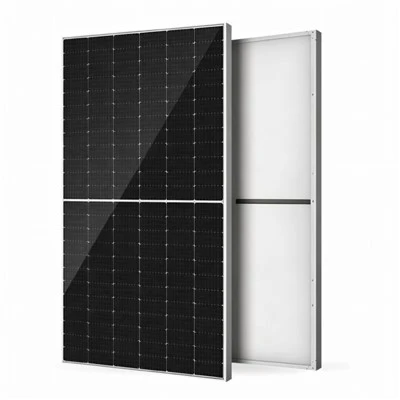
If you’re ready to find the right panel for your gear, or you have questions about our lineup, don’t hesitate to connect with our team to walk through your setup. We’re always here to make sure you get the right fit, so you can harness the sun without the stress.
Bifacial Solar Panels References:
- Portable Solar Power: Voltage, Current, and Compatibility Guidelines. Solar Energy Industries Association.
- Consumer Electronics Charging Specifications: Best Practices for Solar Compatibility. International Electrotechnical Commission.
- Troubleshooting Mismatched Solar Charging Setups. Outdoor Power Equipment Association.
Dongguan MylAn International Trade Co., Ltd.
As one of the most professional portable solar panels manufacturers and suppliers in China, we’re featured by quality products and good price. Please rest assured to buy advanced portable solar panels in stock here from our factory. Welcome to contact us for pricelist.
Address: Room 401, Building 5, No.7, Machong Section, Shuixiang Avenue, Machong Town, Dongguan City, Guangdong Province
E-mail: salee@mylansolar.com
WebSite: https://www.mylansolar.com/
