Hey everyone, thanks for stopping by my little corner of the internet—for those who don’t know me, I’ve been running a glass trophy supply business for over a decade now, and let me tell you, one of the most common questions I get from new buyers is “how do I tell if a glass trophy is actually good quality?” I’ve seen my share of cheap, cloudy trophies that end up getting returned because they look nothing like the promotional photos, and fancy ones that cost way more than they should just because they have a flashy logo. Today I’m breaking down the real, no-BS stuff I’ve learned over the years to help you spot a high-quality glass trophy every time. No fancy industry jargon, just what works for anyone from a small business owner buying team awards to a event planner ordering trophies for a regional competition. Glass Trophy
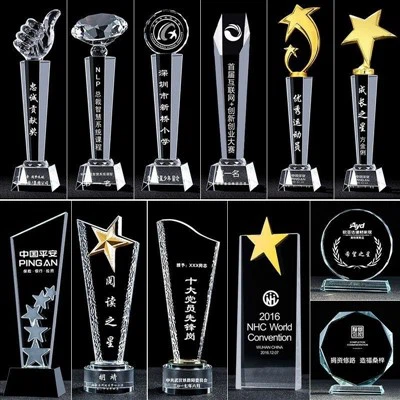
First off, let’s start with the glass itself—this is the foundation, right? A lot of people assume all clear glass is the same, but trust me, it’s not. The biggest difference I see is between standard glass and leaded crystal (wait, no, not the old-school super heavy stuff that’s not great for people—modern leaded crystal has just a tiny bit of lead, mostly to boost clarity, but most of what I use is soda-lime glass, which is way more consistent). Let’s keep it real: if you hold a trophy up to a light source, what do you see? Cheap glass will have little tiny bubbles—super small, almost like air pockets—all through it. These are manufacturing flaws, and they make the trophy look cloudy, especially when you etch a logo on it. I once had a customer send back 50 trophies because you could see a big bubble right where their company logo was supposed to go—total headache, and it’s the kind of thing that just shouldn’t happen with good glass.
Another thing about the glass: hold it up to the light and look at the edges. Any good quality glass trophy will have smooth, polished edges, not rough, chipped, or frosty-looking edges from a cheap cut. I’ve seen those cheap ones you pick up at a gas station that have edges so sharp they could cut you, which is a dead giveaway. Polished edges also make the trophy look way more premium—when you run your finger along the edge, it should feel like glass, not sandpaper. And don’t forget about weight! This is a quick test anyone can do without even looking closely. A high-quality glass trophy will feel solid, substantial in your hand, not light and flimsy like a soda can that’s been crushed. I used to get a batch of cheap samples years ago that felt like they were made of plastic, and that’s never going to give a winner that “wow” feeling when they hold it up.
Next up, the etch or engraving—this is where the personalization is, right? If you’re buying a trophy for an event, the engraving is the whole point, so it has to be done right. There are two main types of engraving for glass: sandblasting and laser engraving. Let’s be honest, sandblasting is mostly used for cheap trophies because it’s faster, but it leaves a frosted, slightly rough finish that can scratch over time, and the lines tend to be blurry. Laser engraving, on the other hand, is precise—you can see every line of the text or logo super clearly, no smudges, and it’s smooth to the touch, not gritty. Wait, but not all laser engraving is equal! I’ve had customers come to me with trophies from other suppliers where the laser burned little black spots around the edges of the text, like it got too hot. That’s a sign they used cheap laser settings or rushed the job. The good stuff will have crisp, clean lines, no discoloration, and it will stay sharp even after wiping it down every few months.
Also, check how deep the engraving is. If you run your fingernail over the text, you shouldn’t feel it at all if it’s a cheap sandblast, or it should be just a tiny, subtle indent for laser. Wait, no—if it’s too deep, that’s a problem too? Yeah, actually, because if it’s cut too deep, the edges can chip over time, especially if the trophy is being moved around a lot. I make sure my engraving is shallow enough to not chip, but deep enough that you can read it from across a room—balance is everything.
Then there’s the base, which a lot of people overlook. The base is what keeps the trophy from tipping over, so it’s super important for both safety and looks. Cheap trophies will have a flimsy plastic base glued to the glass—you can usually spot that because it’s a different color, or it feels lightweight. A good glass trophy base should be solid, either made of the same glass as the trophy (weighted a bit so it doesn’t fall) or sometimes polished metal, but if it’s glass, make sure it’s securely attached. No wiggling! I once sold a batch of trophies for a youth soccer league where a couple of the bases started popping off within a week because the glue was cheap. Now I use a industrial-grade adhesive that’s meant for glass, and I always test a sample to make sure the base doesn’t move when I pull on it gently.
Also, the finish on the base: if it’s a glass base, it should be polished on the bottom so it doesn’t scratch the surface it’s sitting on. I’ve had customers tell me they got a trophy that left scuff marks on their table because the base was rough on the bottom—another no-no. If the base is metal, it should be coated so it doesn’t rust, and the edges should be smooth too. Rust on a trophy base? That’s just embarrassing, especially if you’re giving it out at a formal ceremony.
Wait, let’s talk about coatings and finishes too—some glass trophies have a coating to make them more scratch-resistant, which is a big plus, especially if they’re going to be handled a lot or displayed in a high-traffic area. A lot of cheap glass doesn’t have any coating, so it can get scratched just from being moved around in a box with other trophies. I add a thin, clear scratch-resistant coating to all my trophies, and it’s barely noticeable unless you look super close, but it makes them last way longer. You can test this by gently rubbing a piece of cloth on the trophy—if it’s got a coating, it will feel a little smoother than uncoated glass, and it won’t smudge as easily.
Another trick I use: look at the overall symmetry of the trophy. High-quality glass trophies are cut perfectly, so every side is the same—no lopsided cups, no bases that are a little off-center. Cheap ones often have tiny imperfections where the glass was cut unevenly, so when you hold it up, it looks a little crooked. I once had a customer order a custom trophy for their CEO’s retirement, and they got one from another supplier that was so lopsided, it looked like a toddler had made it. Total waste of money, and I got the next order from them because I make sure every trophy is checked for symmetry before it leaves my workshop.
Wait, what about price? I know that’s a big one for everyone, and I’m not gonna sit here and tell you to drop a bunch of cash on a trophy that’s not worth it. But you get what you pay for, right? If you see a glass trophy for $5 that’s like 10 inches tall, that’s a red flag. Those are going to be full of bubbles, have rough edges, and the engraving will fade in a few months. My advice is to set a budget, then compare a few suppliers. Ask for sample photos (or even better, ask to send a small sample—most suppliers will do that for a small fee) before placing a big order. I always offer free samples for bulk orders, because I want my customers to see exactly what they’re getting, not just a picture on a website.
Let me also tell you about what to avoid, just to make it easy. First, avoid any trophy with obvious bubbles or streaks in the glass—these are manufacturing defects that mean the glass was made quickly, not carefully. Second, avoid rough edges or bases that wiggle—signs of poor cutting and gluing. Third, avoid blurry or smudged engravings, especially if they have black spots from laser burn. Fourth, avoid trophies that feel too light—solid glass is heavy, no way around it.
Oh, and one more thing: the little details that make a good trophy stand out. Do the edges have a bevel? Beveled edges catch the light and make the trophy look way more expensive, but only if they’re done right. A cheap bevel will be uneven, while a good one is sharp and catches light evenly all around. Also, check if the logo or text is centered properly—nothing looks worse than a trophy where the name is off to one side, half on the glass and half on the base. I have a step-by-step process for lining up engravings, so every single one is perfect, and I double-check each order before it ships.
I’ve been in this business long enough that I’ve had customers come back to me after getting a bad trophy from another supplier, and they’re shocked by the difference. Last month, a high school football coach ordered 20 trophies from a big online supplier, and half of them had big bubbles right where the player numbers were. They called me, and I was able to rush them out a new batch, but it turned out the coach had spent almost the same money on the bad ones as he did on the good ones from me. That’s the thing—cheap isn’t always a deal, it’s just a waste.
So if you’re in the market for glass trophies, whether it’s for a small office award, a big sports tournament, or a personal custom piece, remember these tips: check for bubbles and rough edges, test the weight, make sure the engraving is crisp and deep enough, confirm the base is secure and smooth, and don’t be afraid to ask for samples. I know how frustrating it is to spend money on something that doesn’t look as good as it should, and that’s why I take pride in every trophy I make.

If you’re ready to order, or just have questions about what would work best for your event, hit me up—whether you need a few pieces for a local club or a few hundred for a statewide competition, I can help. No pressure, just honest advice and good quality glass trophies that the winners will actually be proud to display for years.
Resin Trophy References:
- Glass Packaging Institute. "Soda-Lime Glass Properties & Quality Standards." 2022.
- Laser Engraving Manufacturers Association. "Best Practices for Glass Engraving." 2021.
- International Trophy Association. "Quality Benchmarks for Custom Trophies & Awards." 2023.
Pujiang County Hongxin E-commerce Co., Ltd.
As one of the most professional glass trophy manufacturers and suppliers in China, we offer a wide range of products with superior quality. Please rest assured to wholesale high-end glass trophy at competitive price from our factory. Good service and punctual delivery are available.
Address: No. 6, Row 4, Section 4, Yuequan West Road, Pujiang
E-mail: hongjiangluo95@gmail.com
WebSite: https://www.crystalcraftfactory.com/
