If you’ve ever worked on a construction site, a factory floor, or even just changed a leaky faucet in your kitchen, you’ve dealt with piping connectors—even if you didn’t realize it. I’ve been selling piping connectors for over 12 years now, and let me tell you, most people don’t ask the real questions about them. They see a little plastic or metal part that joins two pipes together, and they write it off as a trivial, throwaway component. Nah, that’s the mistake everyone makes. A piping connector does way more than just “stick two pipes together.” It’s the unsung backbone of every fluid system out there—from the water lines in your neighborhood to the oil pipelines crisscrossing the globe, to the chemical plants that make the products you use every single day. Piping Connectors
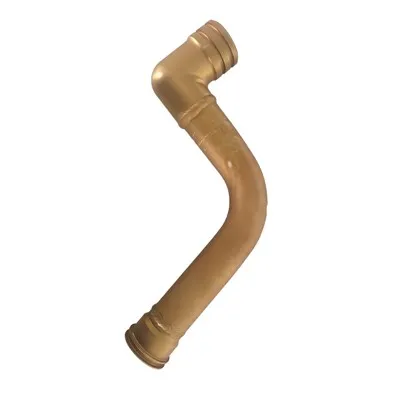
Let’s start with the basics, but keep it real, no stuffy textbook jargon here. First off, connectors are the ones that hold the system tight and leak-free. Think about it: if two pipes just sat next to each other, water (or whatever fluid’s moving through ’em) would spray out everywhere, and you’d have a wet mess, or worse, a total system failure. But a good connector creates a secure, sealed joint that doesn’t budge under pressure. I’ve seen cheap, garbage connectors crack under the pressure of a simple residential water heater replacement—one of my regulars came to me last year panicking because his DIY job with a no-name connector flooded his basement, and he had to pull out drywall and replace flooring. That’s the kind of headache that comes from cutting corners on the seal. A proper connector, though, handles that pressure like it’s no big deal—whether it’s low-pressure household water or high-temperature, high-pressure steam in a power plant.
Next up, flexibility. Wait, what? Connectors make systems flexible? Yeah, you read that right. Pipes expand and contract when temperatures change—you know, like how your metal backyard grill gets super hot in the summer and cold in the winter, it expands and shrinks. If two pipes are welded together permanently (no connector), they’ll crack when they expand or contract. That’s why we sell so many expansion joints and flexible connectors for industrial and commercial sites. They absorb that movement, take the stress off the pipes, and prevent costly breaks. I had a client in the energy sector a few months back who told me their old system didn’t have the right flexible connectors, so every winter, they’d have a pipe burst. Switched to our stuff, and they haven’t had a problem in 18 months. That’s the real win, not just slapping parts together.
Then there’s easy installation and maintenance. Let’s be honest, no one wants to rip out entire pipes every time they need to fix a pump or replace a filter. Connectors let you take parts apart without cutting or welding. Threaded connectors, for example, you just twist ’em on with a wrench. Push-fit connectors? You pop them together with little clips, no tools needed. That saves so much time and money—imagine a factory that has to shut down production to fix a line. The longer it’s down, the more money they lose. We’ve had clients in food and beverage who do full line swaps in a fraction of the time because they use our quick-disconnect connectors. No more waiting for welders or plumbers to show up; a crew can handle a job with the right connectors in half the time.
Oh, and compatibility. Pipes come in all kinds of materials—plastic (PVC, CPVC), metal (steel, copper, brass), even hybrid stuff. A piping connector has to work with whatever pipe you’re using, right? You can’t use a PVC connector on a steel pipe without something to bridge that gap. That’s where we come in—we stock all kinds of adapters that match different materials, sizes, even fluid types. If you’re moving corrosive chemicals, you need a connector made of plastic or stainless steel that won’t rust or break down. If it’s potable water for a city, you need connectors that meet safety standards, no weird chemicals leaching into the water. I’ve dealt with contractors who tried to mix and match connectors they found at the big box store, and it ended up costing them a job because the connector wasn’t compatible with their steel pipe, leading to a leak. So compatibility isn’t trivial—it’s make-or-break for the system.
Wait, let’s not forget about pressure and temperature resistance. Different systems have different demands. A domestic hot water line gets up to 140 degrees F, easy. A pipeline carrying crude oil might be 200 degrees F and pushing hundreds of PSI. The connector has to hold up to that, no matter what. We test every batch of our connectors—we run them at higher pressures and temperatures than their rated limits to make sure they don’t fail. That’s not something every supplier does, I can tell you. A lot of the cheap stuff you see online or at discount stores skips that testing, and that’s why they break. For us, that’s non-negotiable. If a connector can’t handle the job, it’s not leaving our warehouse.
Another big one: preventing contamination. For industries like pharmaceuticals, food and beverage, or even drinking water, contaminants are a no-go. Connectors have to be smooth, easy to clean, no crevices where bacteria or gunk can build up. We make sanitary connectors for food processing lines that are designed to be CIP (clean-in-place) compatible—they can handle harsh cleaning chemicals, and there’s nowhere for residue to hide. If you had a connector that traps food particles, that could lead to spoilage or even make people sick. That’s a huge responsibility, and our connectors are built to meet those strict requirements. I work with a craft brewery that swears by our sanitary tri-clamp connectors—they switch them out every few weeks for deep cleans, and they haven’t had any contamination issues since.
Let’s talk about adaptability too. Systems change, right? A factory might expand, a building might add a new wing, a homeowner might want to rework their plumbing. Connectors let you adjust the system without a complete overhaul. If you need to add a new line to your water heater, a threaded adapter lets you hook that up without replacing the whole main pipe. For industrial clients, we have reducer connectors that adjust from one pipe size to another, so you can connect a small line to a big one seamlessly. That kind of adaptability is what makes piping systems modular, not fixed. You’re not locked into a setup forever—you can tweak it as needed, which saves so much hassle and cost.
Now, I know some of you are thinking, “Isn’t that what pipes do?” But no, pipes are the skeleton, the connectors are the circulatory system. They transfer the load, handle the movement, keep things sealed, make maintenance possible. I’ve seen so many projects go sideways because someone used the wrong connector. Last year, a local construction crew was building a new office building, and they used cheap push-fit connectors for the fire suppression lines. Halfway through the project, a few of them popped loose under pressure, and they had to rip out walls and redo all the lines. That delayed the opening by two months and cost them tens of thousands of dollars. If they’d come to us first, we would’ve set them up with the right connectors for fire systems, which are built to handle way higher pressure and don’t fail like that.
The thing is, as a connector supplier, I don’t just sell parts. I sell solutions. I walk into a job site, ask the right questions: what fluid are you moving? What’s the pressure? The temperature? Is this a residential home, a factory, a chemical plant? Then I point them to the right connector, not just the cheapest one. I’ve had contractors come back to me for years because they know I’m not gonna steer ’em wrong. I’d rather sell a connector that lasts 20 years than one that fails in 2, because that keeps my clients happy and builds trust.
Let’s get real about the hidden costs of bad connectors. If a connector fails, you’re not just replacing the part. You’re paying for downtime, repairs, maybe lost product (if it’s a food or chemical line), even fines if it’s a municipal or industrial system that has to meet safety standards. I’ve seen a chemical plant shut down for three days because a cheap connector corroded and leaked, costing them millions. That’s way more than the difference between a $1 connector and a $3 connector. Investing in quality connectors isn’t a luxury—it’s a necessity.
So, when you see a piping connector next time, whether you’re fixing your sink or planning a big pipeline project, don’t just see a little joint. See the part that holds it all together, that absorbs the stress, that makes repairs easy, that keeps contaminants out. It’s not the most flashy part of a system, but it’s the most important.
If you’re working on a project right now and need the right piping connectors—whether it’s for a small home repair, a commercial build, or an industrial process—reach out. I’ve got the stuff, the experience, and the know-how to make sure you get exactly what you need, no guesswork, no cheap garbage that’s gonna cause headaches later. Hit me up to chat through your needs, and we can figure out the perfect solution for your system.
Rubber Parts References
Piping Systems: Principles, Design, and Practice, 3rd Edition, American Society of Mechanical Engineers
Sanitary Piping Standards for Food, Beverage, and Pharmaceutical Industries, International Society of Automation
Pressure Piping Connector Testing and Performance Specifications, National Fluid Power Association
Jiangxi Zhiyi Machinery Manufacturing Co., Ltd.
As one of the most professional piping connectors manufacturers and suppliers in China, we also support customized service. Please rest assured to wholesale bulk piping connectors in stock here from our factory. If you have any enquiry about quotation, please feel free to email us.
Address: Jiahai Industrial Park, No. 2799 Tianxiang Avenue, High-tech Zone, Nanchang City, Jiangxi Province.
E-mail: zgjxzy@163.com
WebSite: https://www.chinazhiyi.com/
