In the modern industrial landscape, industrial robots have emerged as a cornerstone of manufacturing and automation processes. As a supplier of industrial robots, I have witnessed firsthand the revolutionary impact these machines have had on various industries. They offer precision, efficiency, and reliability, enabling businesses to streamline production, reduce costs, and enhance product quality. However, the implementation and programming of industrial robots are not without their challenges. In this blog post, I will delve into the key challenges faced in programming industrial robots and discuss potential solutions. Industrial Robots
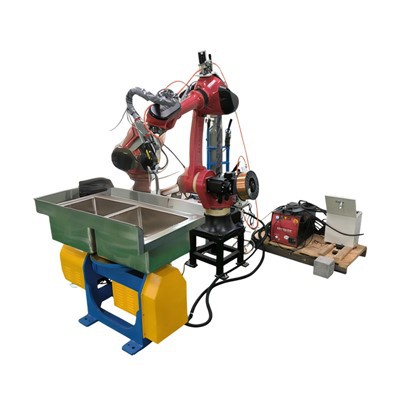
Complexity of Industrial Robot Programming
One of the primary challenges in programming industrial robots is the complexity of the task itself. Industrial robots are intricate machines with multiple degrees of freedom, joints, and axes. Programming these robots requires a deep understanding of kinematics, dynamics, and control theory. Each movement of the robot must be carefully calculated to ensure precision and accuracy. For example, in a pick – and – place application, the robot needs to reach a specific location, grasp an object with the right amount of force, and place it at the desired destination. Any miscalculation can lead to errors in the production process.
Moreover, different models and makes of industrial robots have their own proprietary programming languages and interfaces. For instance, Fanuc robots use their own teaching pendant and programming language, while ABB robots have a different set of programming tools. This means that programmers need to be trained on each specific type of robot, which can be time – consuming and costly for companies. Some robots also support a mix of graphical programming interfaces and text – based programming languages. The graphical interfaces can be more intuitive for beginners, but text – based programming offers more flexibility and power. However, learning these different programming styles adds to the complexity of the task.
Safety Considerations in Programming
Safety is a top priority in any industrial environment. When programming industrial robots, ensuring the safety of human operators and other equipment is of utmost importance. Robots can move at high speeds and with great force, and a small programming error can result in serious accidents. Therefore, programmers need to incorporate safety features into the robot programs.
One common safety feature is collision avoidance. The robot program must be designed in such a way that the robot can detect obstacles in its path and adjust its movement accordingly. This requires the use of sensors such as laser scanners, cameras, and proximity sensors. The programmer needs to understand how these sensors work and integrate them into the robot’s control system. Additionally, safety zones need to be defined in the program to prevent the robot from entering areas where human operators are present.
Another aspect of safety is emergency stop functionality. The robot program should include a reliable emergency stop mechanism that can be triggered in case of an emergency. This ensures that the robot can be stopped immediately to prevent any potential harm. However, implementing these safety features in the robot program can add complexity and may require additional hardware and software components.
Integration with Existing Systems
Industrial robots are rarely used in isolation. They need to be integrated with other equipment and systems in the factory, such as conveyor belts, sensors, programmable logic controllers (PLCs), and enterprise resource planning (ERP) systems. This integration poses significant challenges in programming.
For example, when integrating a robot with a conveyor belt, the robot program needs to synchronize with the movement of the conveyor. The robot must be able to pick or place objects at the right time as the conveyor moves. This requires real – time communication between the robot controller and the conveyor control system. Similarly, when integrating with a PLC, the robot program needs to exchange data such as input and output signals to coordinate the overall production process.
Integrating with an ERP system is also crucial for data management and production planning. The robot needs to send and receive information about production orders, inventory levels, and quality control data. However, different systems may use different communication protocols and data formats, making the integration process complex. Programmers need to have a good understanding of these systems and be able to write code that can bridge the communication gap between the robot and other equipment.
Adaptability and Flexibility
In today’s rapidly changing industrial environment, manufacturers need to be able to adapt quickly to new product designs, production requirements, and market demands. This requires industrial robots to be highly adaptable and flexible. However, programming robots for adaptability is a challenge.
Traditional robot programming methods often involve writing fixed programs for specific tasks. If there is a change in the product or the production process, the entire program may need to be rewritten. This is time – consuming and expensive. To address this challenge, new programming techniques such as offline programming (OLP) and robot programming by teaching (RPT) have been developed.
Offline programming allows programmers to create and simulate robot programs on a computer without interfering with the actual production process. This enables faster program development and testing. Robot programming by teaching, on the other hand, allows operators to teach the robot new tasks by physically guiding the robot through the desired motions. These techniques increase the flexibility of the robot, but they also require programmers to have a new set of skills and knowledge.
Maintenance and Troubleshooting
Industrial robots need to be maintained regularly to ensure their proper functioning. Programming is an important aspect of robot maintenance. When a robot malfunctions, programmers need to be able to troubleshoot the problem and make the necessary adjustments to the program.
One of the challenges in troubleshooting robot programs is the complexity of the robot’s control system. The control system consists of multiple layers of software and hardware components, and identifying the root cause of a problem can be difficult. For example, if a robot is not moving correctly, the problem could be due to a programming error, a sensor malfunction, or a mechanical issue. Programmers need to have a comprehensive understanding of the entire system to diagnose and fix the problem.
In addition, as robots are often used in harsh industrial environments, they are exposed to factors such as dust, heat, and vibration. These factors can cause wear and tear on the robot’s components and may also affect the performance of the program. Therefore, programmers need to write programs that are robust and can withstand these environmental challenges.
Skilled Labor Shortage
The field of industrial robot programming requires a high – level of technical skills and knowledge. There is currently a shortage of skilled programmers who are proficient in programming industrial robots. This shortage is due in part to the complexity of the subject matter and the relatively new nature of the technology.
Educational institutions are struggling to keep up with the demand for trained professionals in this field. The curriculum in many schools does not adequately cover the latest programming techniques and technologies related to industrial robots. As a result, companies often find it difficult to find qualified programmers to develop and maintain their robot programs.
To address this challenge, companies need to invest in training their existing employees and providing them with opportunities to learn about industrial robot programming. They can also partner with educational institutions to develop customized training programs. Additionally, governments and industry associations can play a role in promoting the field of industrial robot programming and providing incentives for students to pursue careers in this area.
Solutions and Future Outlook
Despite these challenges, there are several solutions that can help overcome them. Advancements in technology are making robot programming easier and more accessible. For example, the development of more user – friendly programming interfaces and software tools is reducing the learning curve for programmers. Additionally, the use of artificial intelligence (AI) and machine learning (ML) in robot programming is enabling robots to learn from experience and adapt to new situations more quickly.
In the future, we can expect to see even more innovative solutions in the field of industrial robot programming. For example, the combination of cloud computing and robotics will allow for more efficient data management and remote programming. Robots will also become more collaborative, working alongside human operators in a safer and more efficient manner.
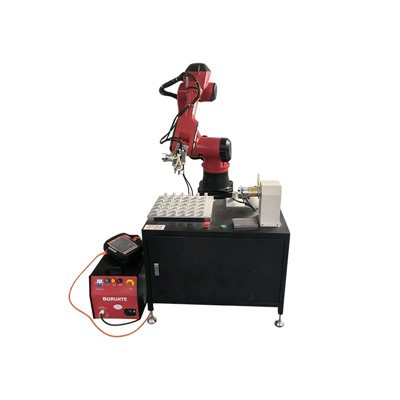
As an industrial robot supplier, we are committed to providing our customers with the support and resources they need to overcome these challenges. We offer training programs for robot programming, as well as technical support to help with installation, integration, and troubleshooting. Our team of experts is always ready to assist customers in finding the best solutions for their specific needs.
Nail Gun Robot If you are interested in learning more about our industrial robots and how we can help you with your programming challenges, we invite you to reach out to us for a procurement discussion. Our experienced sales team will be happy to provide you with detailed information and answer any questions you may have.
References
- Dorf, R. C., & Bishop, R. H. (2016). Modern Control Systems. Pearson.
- Sipser, M. (2012). Introduction to the Theory of Computation. Cengage Learning.
- Craig, J. J. (2005). Introduction to Robotics: Mechanics and Control. Pearson.
Dongguan Chuanglida Intelligent Equipments Co., Ltd.
As one of the most professional industrial robots manufacturers and suppliers in China, we also support customized service. Please feel free to buy discount industrial robots in stock here from our factory. For price consultation, contact us.
Address: Room 201, Building 2, No. 61, Shachang 1st Road, Dalang Town, Dongguan City, Guangdong Province
E-mail: haoguangli001@outlook.com
WebSite: https://www.boruntestech.com/
